
1、名词解释
- __Absorption Rate(吸收速率)__:Measures how quickly a suture is absorbed or broken down by the body. Refers only to the presence or absence of suture material and not to the amount of strength remaining in the suture.
- __Breaking Strength Retention (BSR)(断裂强度的保留率)__:Measures tensile strength (see below) retained by suture in vivo over time. For example, a suture with an initial tensile strength of 20 lbs. and 50% of its BSR at 1 week has 10 lbs. of tensile strength in vivo at 1 week.
- __Extensibility(延展性)__:The characteristic of suture stretch during knot tying and recovery thereafter. Familiarity with suture’s extensibility will help the surgeon know when the suture knot is snug.
- __Memory__:Refers to a suture’s tendency to retain kinks or bends (set by the material’s extrusion process or packaging) instead of lying flat.# 指材料保持打结状态的能力。
- __Monofilament(单丝)__:Describes a suture made of a single strand or filament.
- __Multifilament(多丝)__:Describes a suture made of several braided or twisted strands or filaments.
- __Tensile Strength(抗张强度)__:The measured pounds of tension that a knotted suture strand can withstand before breaking.
- __United States Pharmacopeia (USP)__:An organization that promotes the public health by establishing and disseminating officially recognized standards of quality and authoritative information for the use of medicines and other healthcare technologies by health professionals, patients, and consumers.
2、basic knots
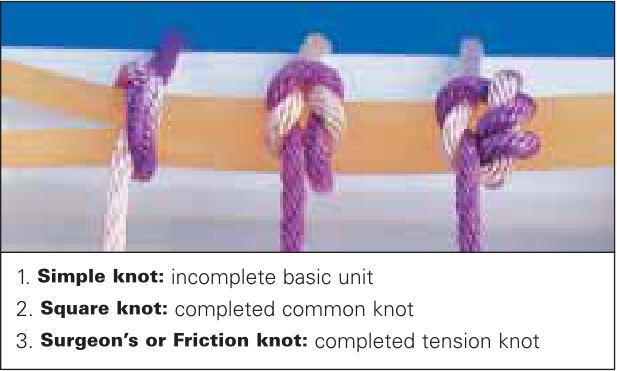
3、打结要求
- 结不能松
- 结要小:较小机体对结的排斥反应
- 线之间不能有摩擦力
- 避免损伤缝合材料
- 尽量无张力缝合
- 缝合不能太紧
- 如果有张力,第一圈打紧后要牵住一端防止结松
- 随后一次拉紧线时尽量水平用力
- 即时变换体位打结
- 增加结数量不能增加结的强度,只会增加体积,有例外。
4、square knot(方结)
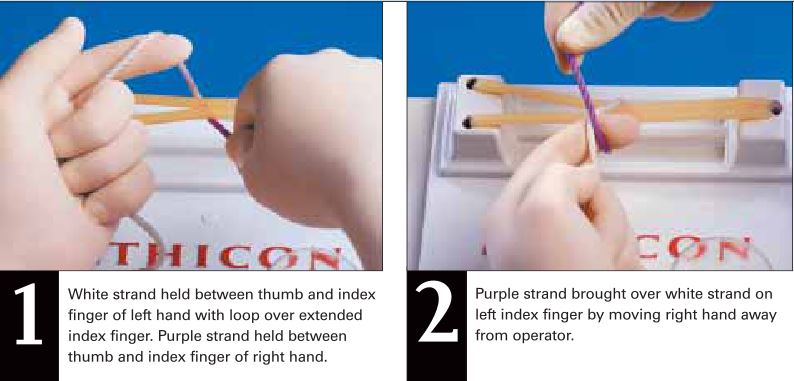
(1)、two-hand technique
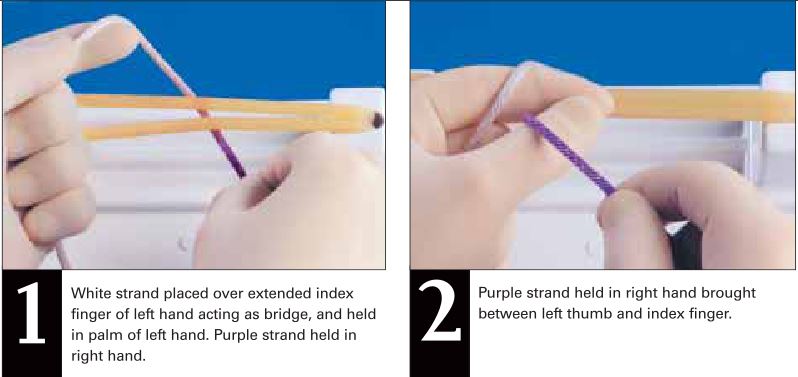
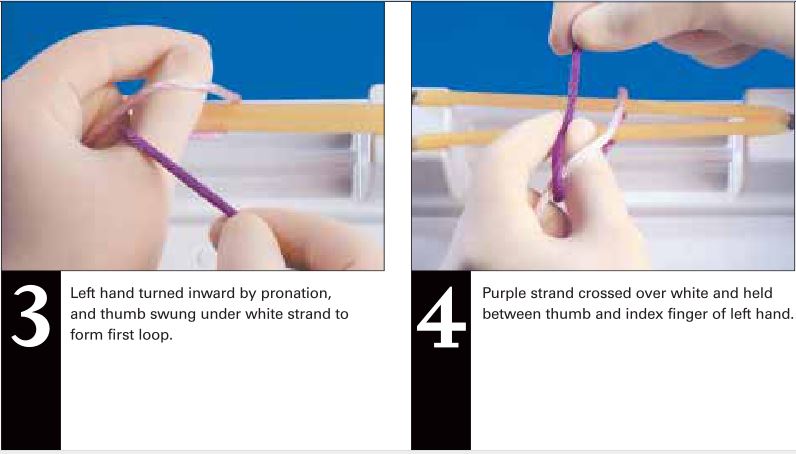
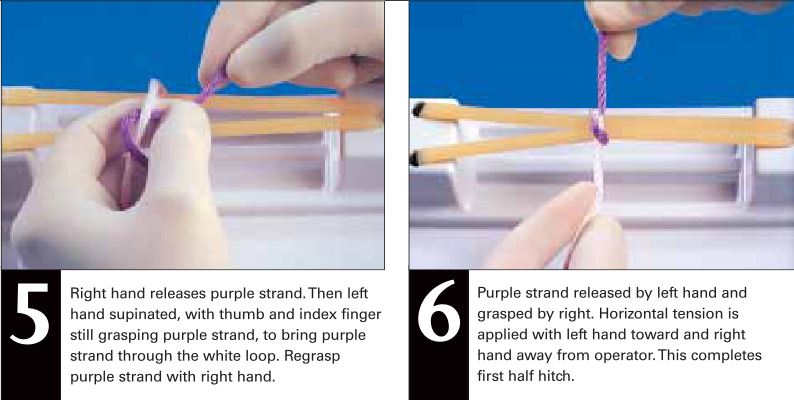
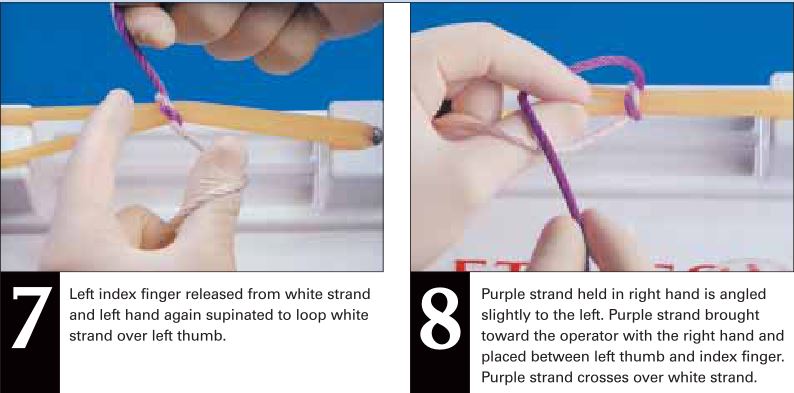
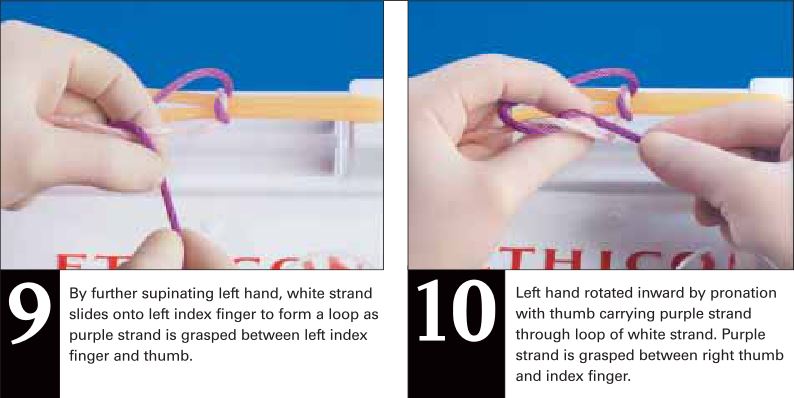
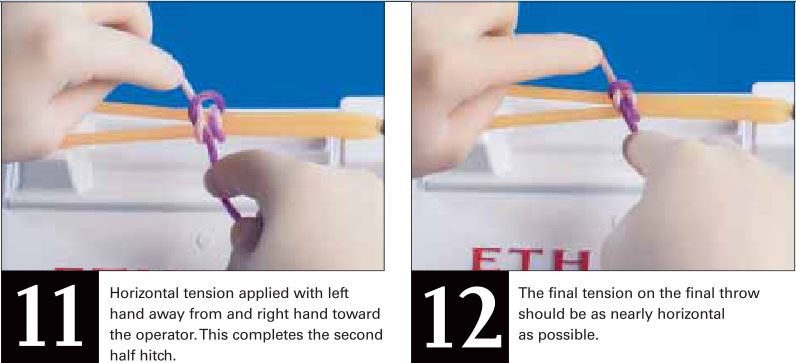
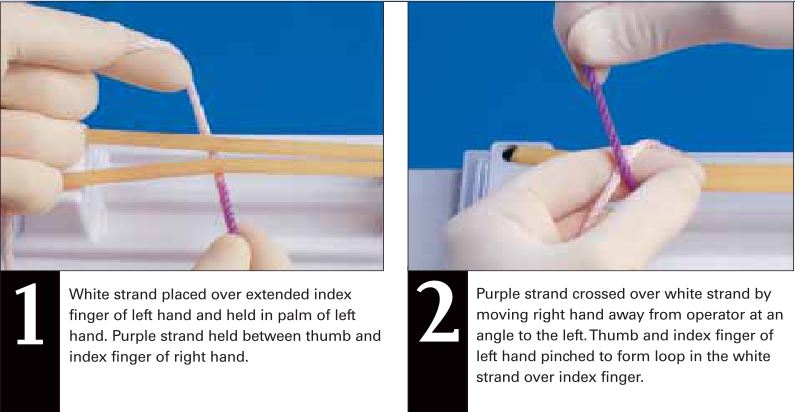
(2)、one-hand technique
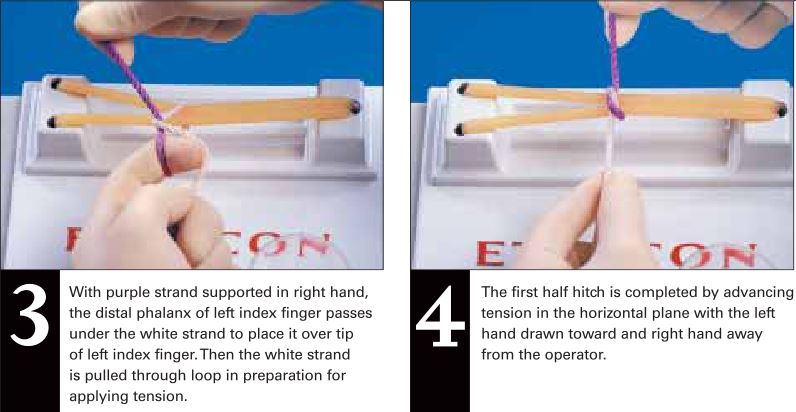
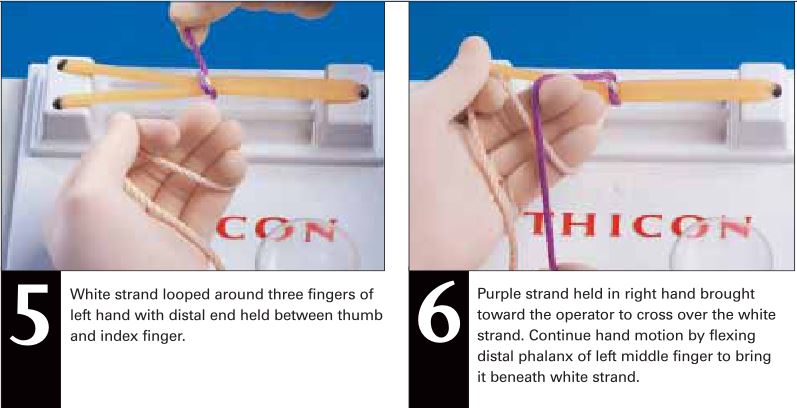
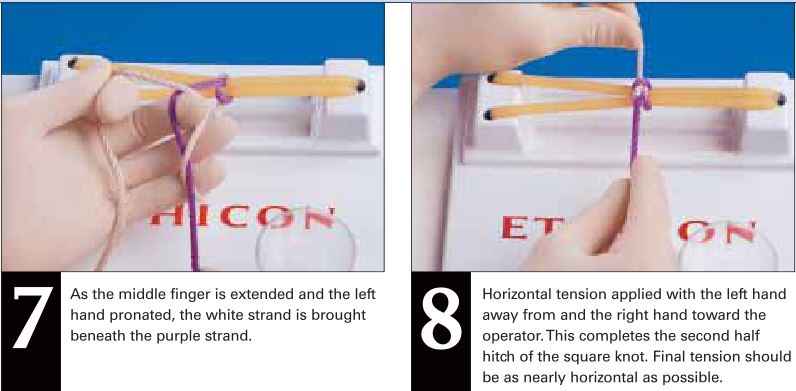
5、surgeon’s or friction knot
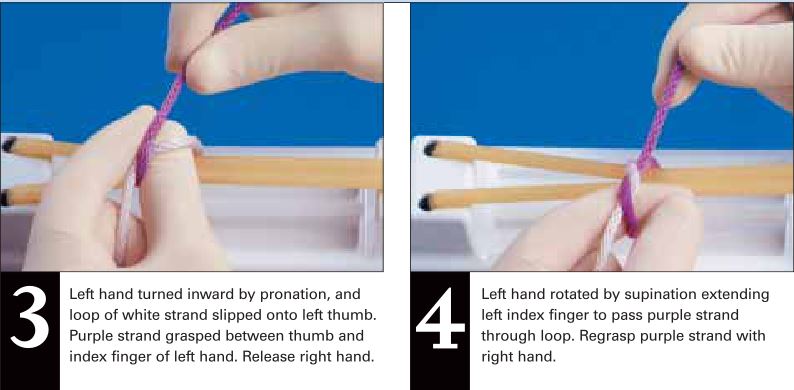
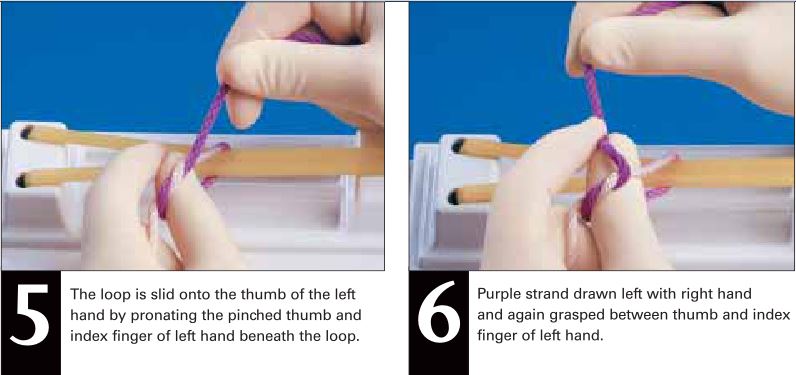
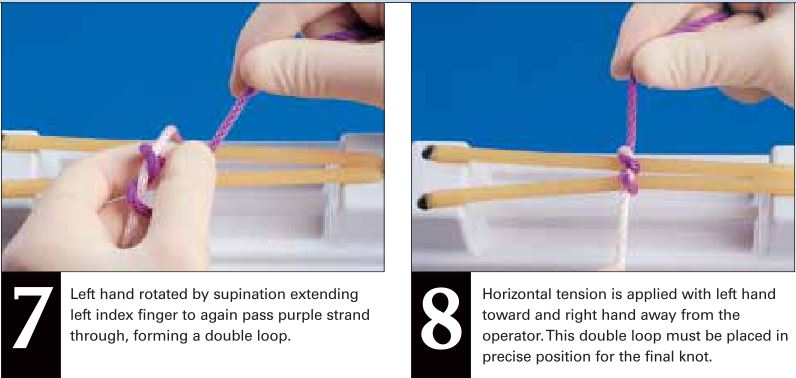
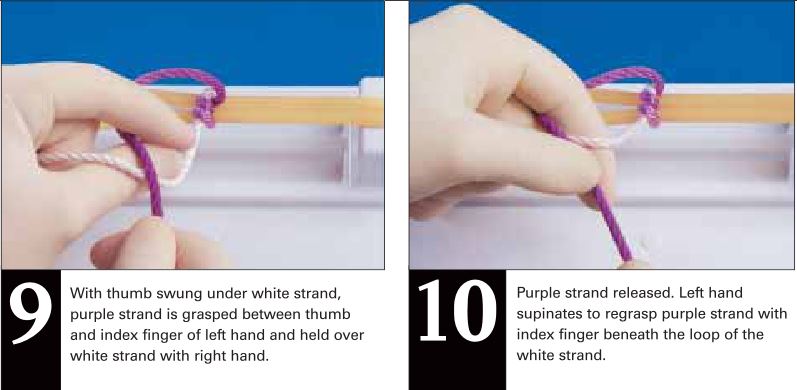
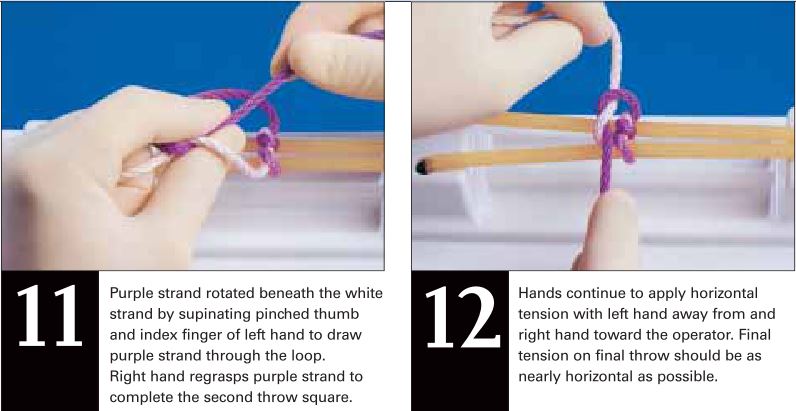
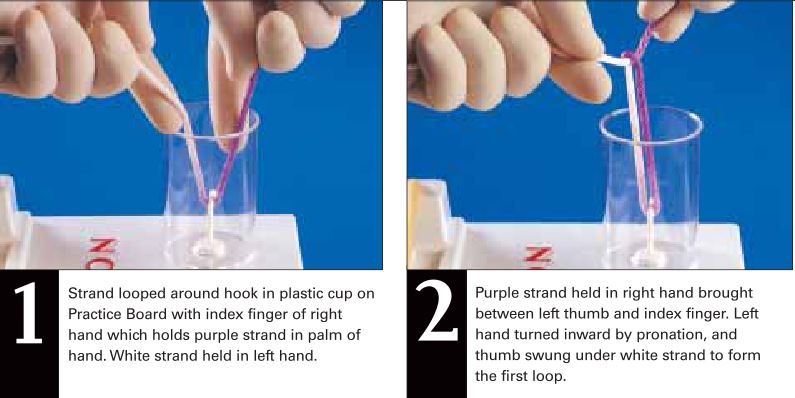
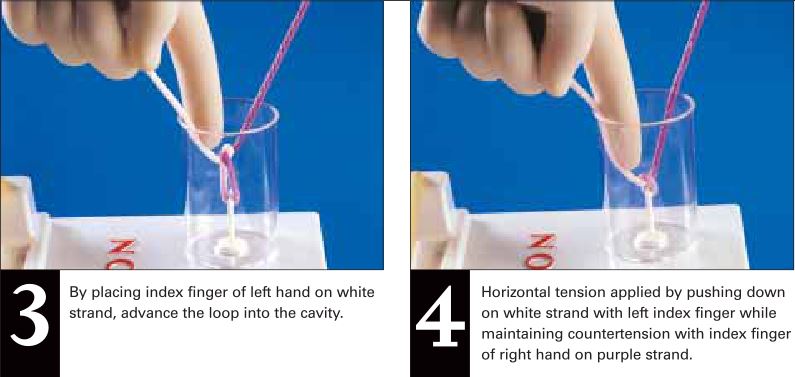
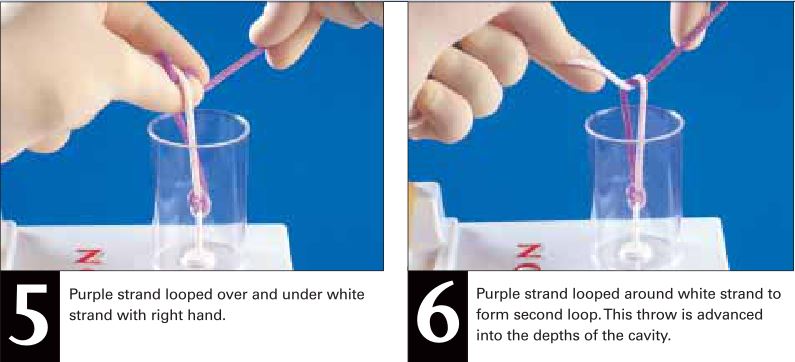
6、deep tie
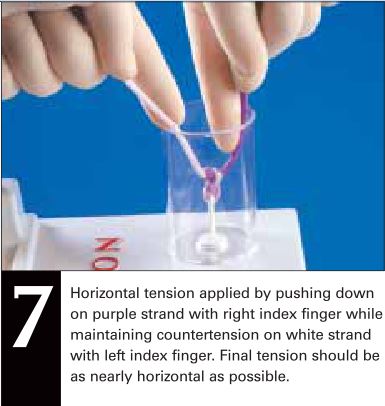
7、ligation around hemostatic clamp
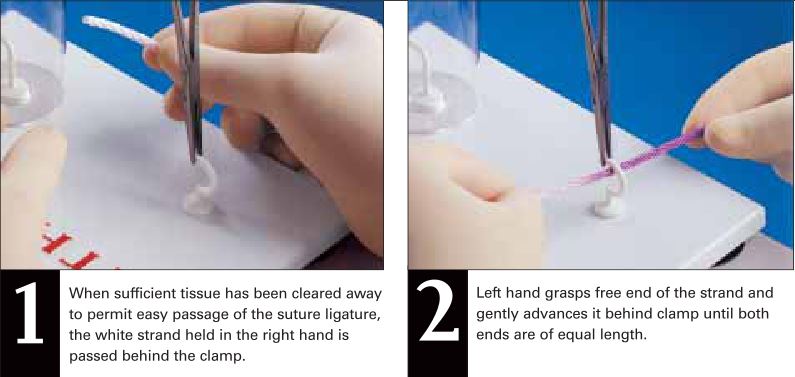
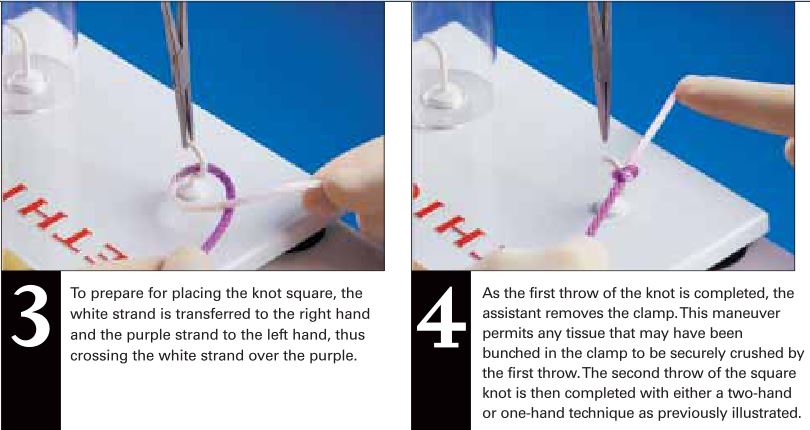
—–another way——
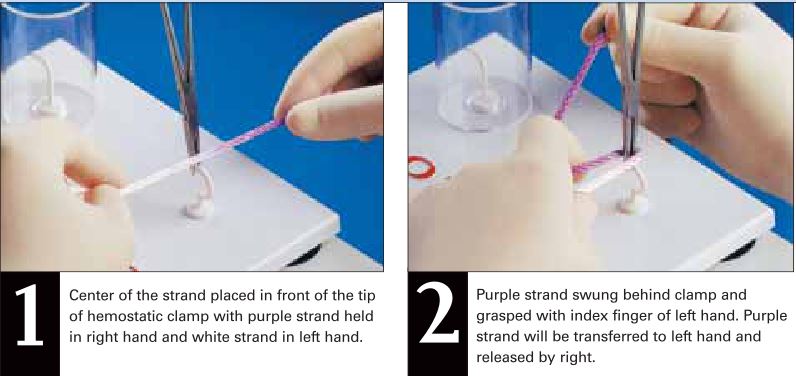
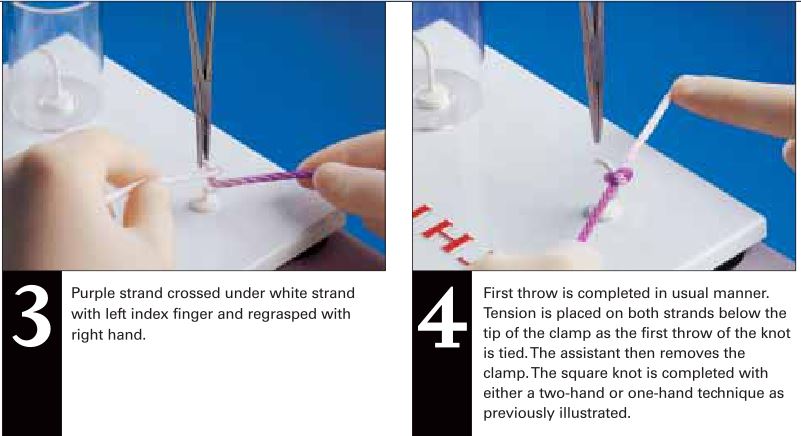
8、instrument tie
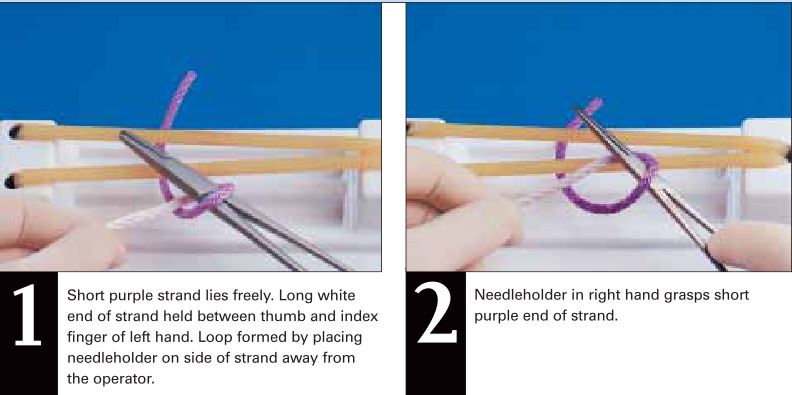
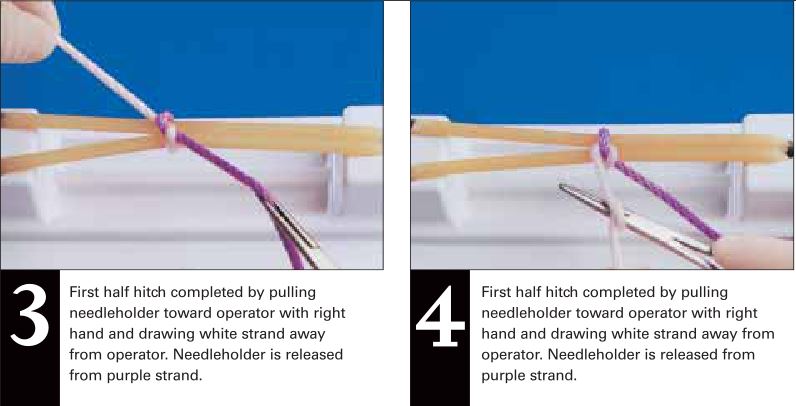
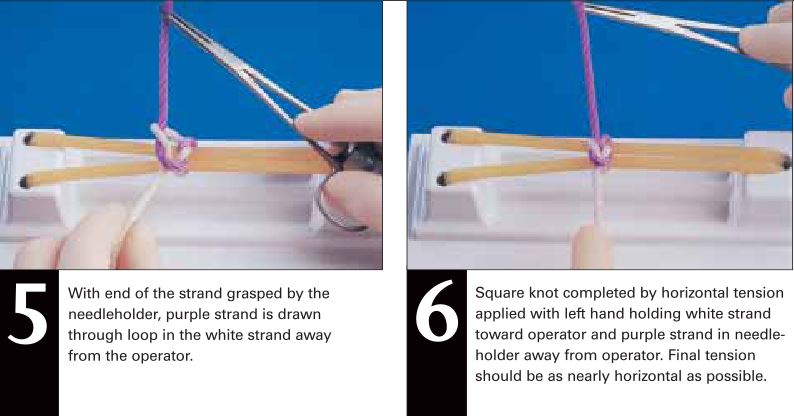
9、缝合材料
- 可吸收
- 不可吸收
- 单股线:光滑、不易滋生细菌
- 多股线:twisted or braided
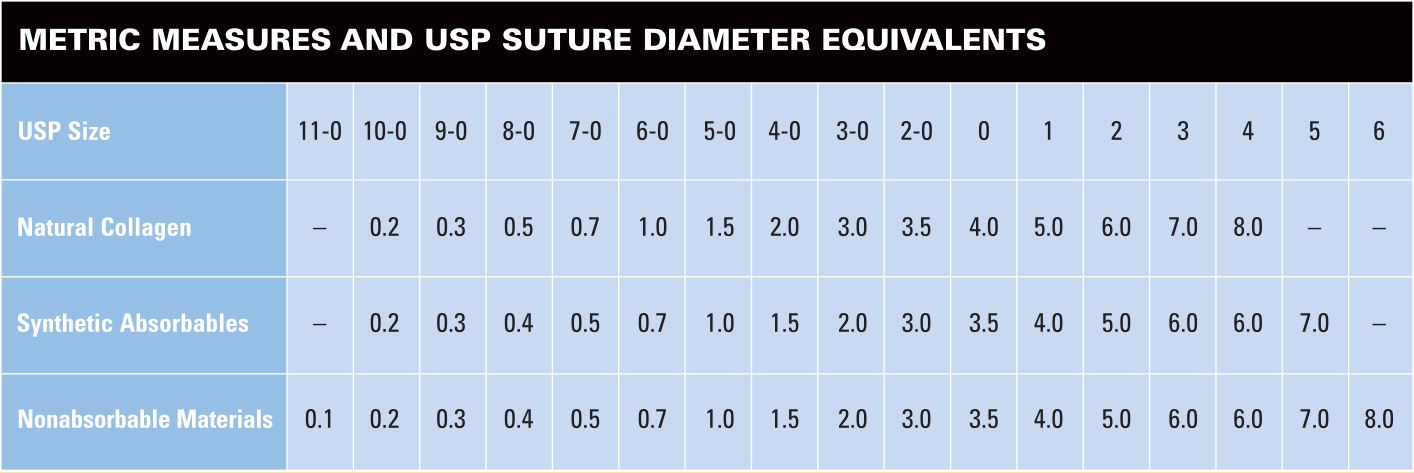
选择缝线需考虑的因素:【伤口愈合时间】【线吸收速率】【伤口是否易感染】【美观性】【避免缝线切割组织,拆线时间】
10、缝合针
- 创伤小
- 锋利
- 坚硬,抗弯曲
- 无菌
- 耐腐蚀
- stainless steel